How Do You Know Where to Find the Gas Shut Off Valve
How to detect and operate shutoff valves for gas and water pipes.
Finding the shutoff valves
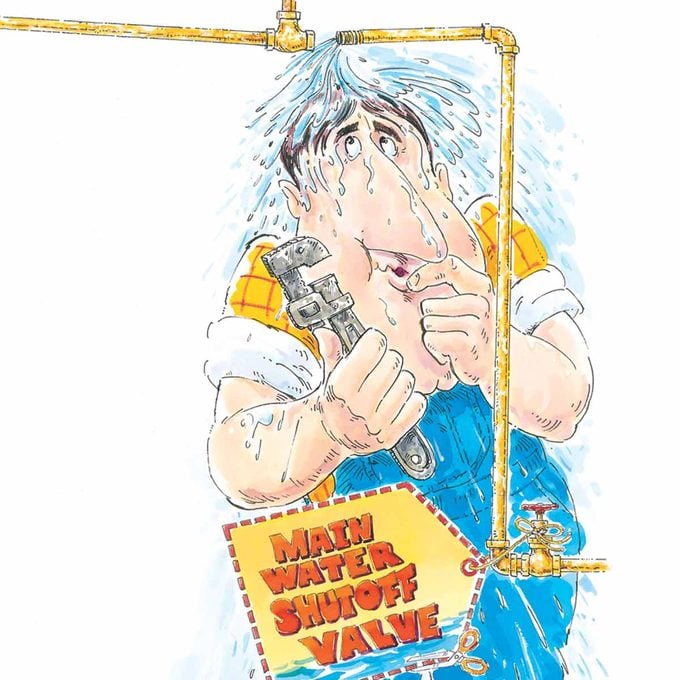
Some things in life are worth learning before it's too late—like the locations of your water and gas shutoff valves. Now granted, these shutoff valves are often hidden in some nighttime, creepy corner of the house. But if a water pipe springs a leak, knowing where the shutoff valve is could save you lot thousands in water damage repairs. What's more, you can't make those major plumbing repairs or improvements unless you first turn off the water. The same goes for turning off the gas—though with some strict safety precautions, which we'll talk about later.
Home h2o and gas systems contain two types of shutoff valves: principal or master shutoff valves for stopping the flow of gas or water to the entire house, and private or supply shutoff valves for specific appliances and fixtures. We'll look at both types and tell you how to identify them (since they often look similar), where they are and how to operate them.
You'll notice this story contains a lot of "oftens," "usuallys" and "almost always's." That's because valves vary greatly in location, shape and number, depending on the age of your house, the local codes and which function of the country you live in. This article covers the basics of each organization.
Cheque out all of our plumbing valve content here. You may just find something you've been curious about for awhile.
Gas shutoff valves
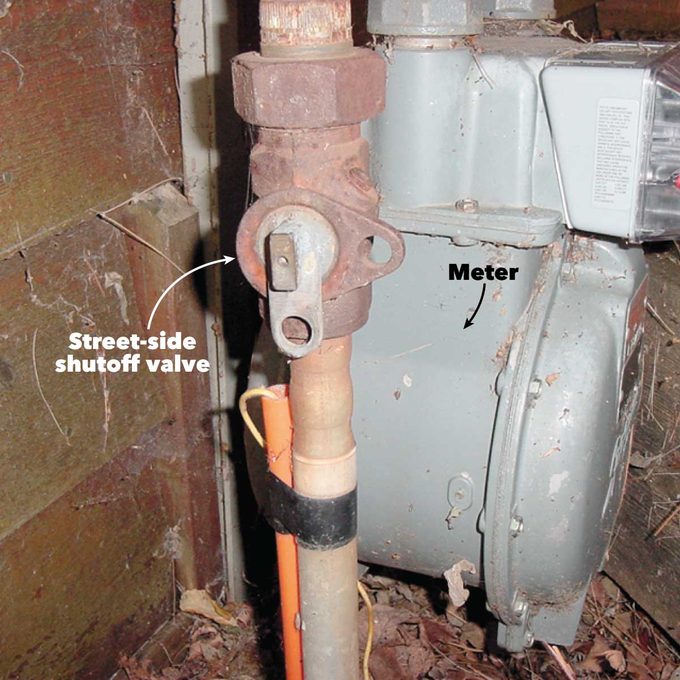
Photograph one: Street-side gas valve
Houses with natural gas accept a chief shutoff valve (Fig. A) located just earlier the gas meter. This valve, often called the street-side valve, is normally a rectangular nub (Photo 1). When the long side of the nub or handle is parallel to the incoming gas line, information technology's open up and the gas is flowing. When it'southward turned a quarter turn, perpendicular to the incoming pipe, it's closed.
The street-side master shutoff valve must be opened and closed with a wrench, and, truth be told, gas companies don't want you operating this valve; they just desire their own employees, plumbing and heating contractors and burn department personnel to apply it. They'd rather you use the house-side main shutoff valve located later on the meter (Photo 2).
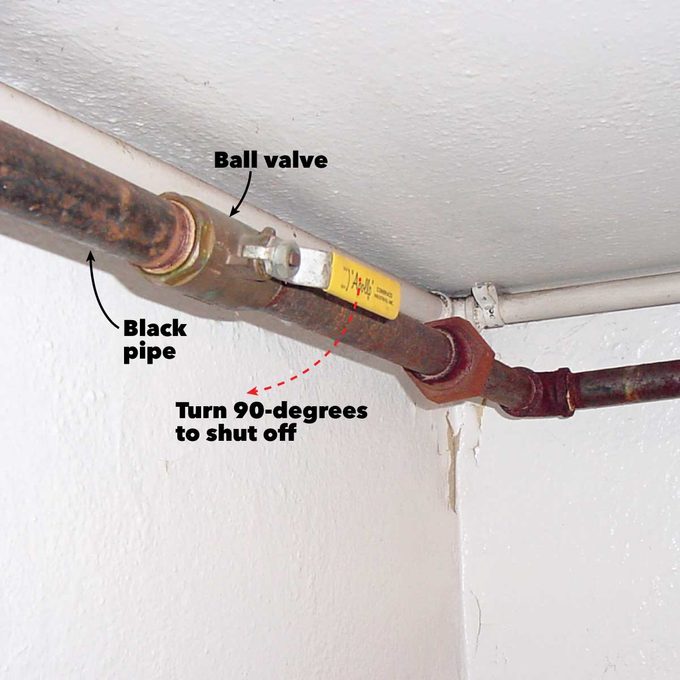
Photo ii: House-side gas valve
This firm-side valve—usually a ball valve—may be located where the pipe first enters the house or farther downwards the line, just it volition ever exist located before the first appliance. If fe pipe is transporting the gas, it'south ofttimes black; this differentiates information technology from similar-shaped, gray galvanized water pipe.
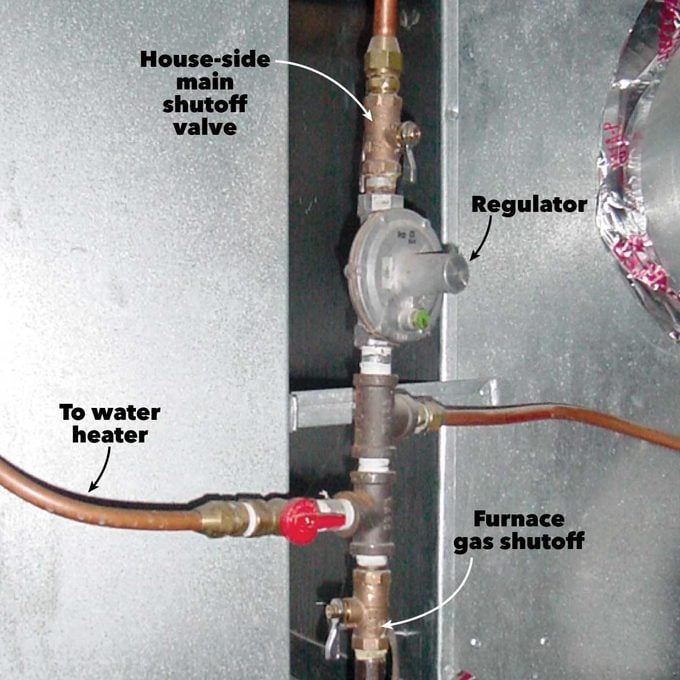
Photo iii: Higher pressure natural gas arrangement
If your home is newer and you find a flexible copper pipe running from the meter into your utility room, you probably accept a college pressure gas system. In this case, your inside main shutoff valve (Photograph 3) is probably near your furnace or water heater, just before it enters a flight saucer–shaped doodad chosen a pressure regulator. In that location's besides a chance your domicile—especially if it's older—doesn't have a house-side main shutoff valve.
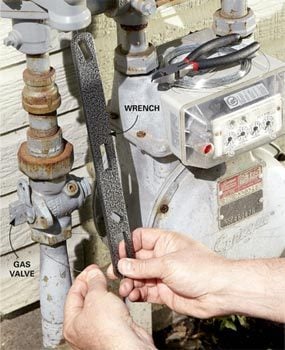
Photo 4: Hang a wrench near the shutoff
Hang the wrench from the gas meter supply pipe with a slice of stainless steel wire. And so secure the bottom portion. Twist the wire but a few times so it'll release quickly in an emergency.
Locate those valves?
Well, don't merely sit there; become upward and locate those valves! And then tag 'em as we explain in Fig. B. In addition to the house-side main shutoff valve, individual gas appliances should have a service or appliance shutoff valve (Fig. A) that's immediately accessible, in the same room and within half dozen ft. of the apparatus. These valves allow you to stop the flow of gas to your dryer, oven, furnace, water heater or gas fireplaces to make repairs or new installations without cutting off gas to your entire home.
Most service valves are single-lever ball valves; again, handle parallel to the line means gas is flowing, perpendicular ways it'southward cut off. On dryers and ranges, this valve is usually hidden backside them and tin only exist reached by sliding the appliance out from the wall. This service valve volition usually exist at the stop of a fixed pipage and connected to a flexible supply pipe called an appliance connector. Take care not to kink or pinch this flexible pipe.
When you repair or supercede a gas appliance, use these shutoff valves to stop the flow of gas. (Well-nigh pros supervene upon the flexible connector when they supplant the appliance.) If you find you take a faulty supply valve, or your system doesn't have one, turn off the gas using the house side primary shutoff valve.
For those with propane or liquefied petroleum gas, in that location'south a principal shutoff valve on the tank itself, and usually a chief shutoff valve somewhere earlier the first appliance. Some valves (both gas and water) manufactured earlier 1980 contain a lubricant to help the valve seal better and operate more than smoothly. In many cases, this lubricant will have hardened or reacted with the gas to make the valve difficult to plough. Applying gentle heat with a hair dryer and working the valve open and close in stages will usually complimentary information technology upwards again. Sometimes y'all demand to use a pliers to free the stuck handle.
Important! At present that you know where your gas valves are, also know this: it's not always safe for y'all to plough these valves off in an emergency. When gas reaches a certain concentration in a room or house, the slightest spark tin can set off a tremendous explosion. A light switch or telephone—fifty-fifty static electricity from your apparel—can produce such a spark.
If yous're working nigh the main or individual gas valve and conspicuously know the source of the gas leak and that gas hasn't been leaking for long, shut off the valve and get out. But if you're uncertain of the source or how long the gas has been leaking, clear yourself and your family out and telephone call the gas company or burn department from a neighbor's house (not your ain—remember, phones tin generate sparks!). Ever err on the side of caution.
It's a good thought to get ready for gas emergencies before they happen, because sometimes projects involving gas lines don't go every bit planned. When a gas project goes bad, that'due south not the fourth dimension to exist searching for the correct tool to shut the gas off at the meter. A good strategy is to buy an emergency gas meter wrench shutoff tool and secure it to the meter as shown in Photo 4. Pick i up at a home heart for nearly $12.
Also note: When yous close off main or individual gas valves, you lot'll be extinguishing the airplane pilot lights to certain appliances. Many newer appliances accept "pilot light–less" electronic ignition systems, but if you have older appliances, yous'll need to relight the airplane pilot lights. Most appliances accept articulate relighting directions on a characterization nearly the pilot light or in the instruction manual.
Simply some pilots are pretty darn hard to reach. If you're uncomfortable with relighting the pilot low-cal, hire a plumber or phone call your local gas service company.
Click here to learn how to gear up a h2o heater pilot light.
Figure A: Typical Gas System
This analogy shows how gas is brought into the business firm from the street. You tin can find a larger version of this image in the Boosted Information.
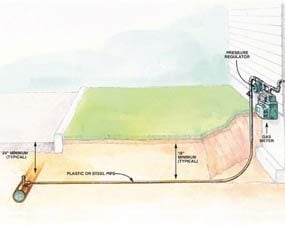
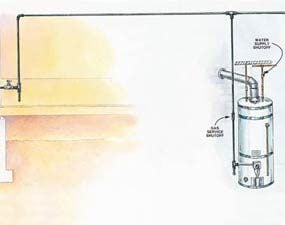
Figure B: Gas System Within the House
This illustration shows how gas is delivered in the house. Once you've located your main shutoff valves, label them. Yous can find a larger version of this image in the Additional Data.
Water shutoff valves
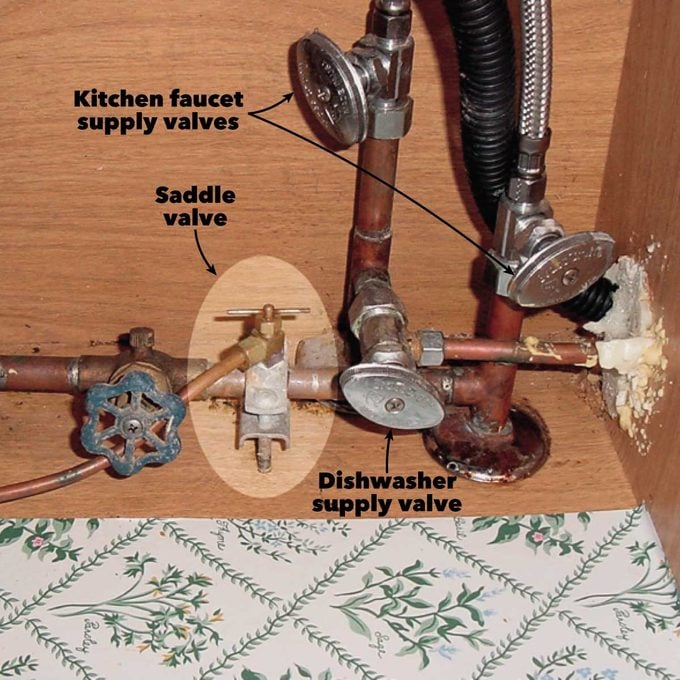
Photo 5: Supply valves
Almost all water meters have 1 principal shutoff valve straight earlier the meter and some other directly after (Photo v). Where the meter is located depends on the climate in your area.
In cold climates (Fig. D), the meter and main shutoff valves are located inside, usually in a basement or other warm area to preclude freezing. In milder climates (Fig. C), the meter and its ii shutoff valves may be fastened to an exterior wall or nestled in an secret box with a removable lid.
Since these things tin can leak like crazy and cause tremendous damage, I'thou replacing information technology with a standard supply cease as before long as I'yard washed with this story.
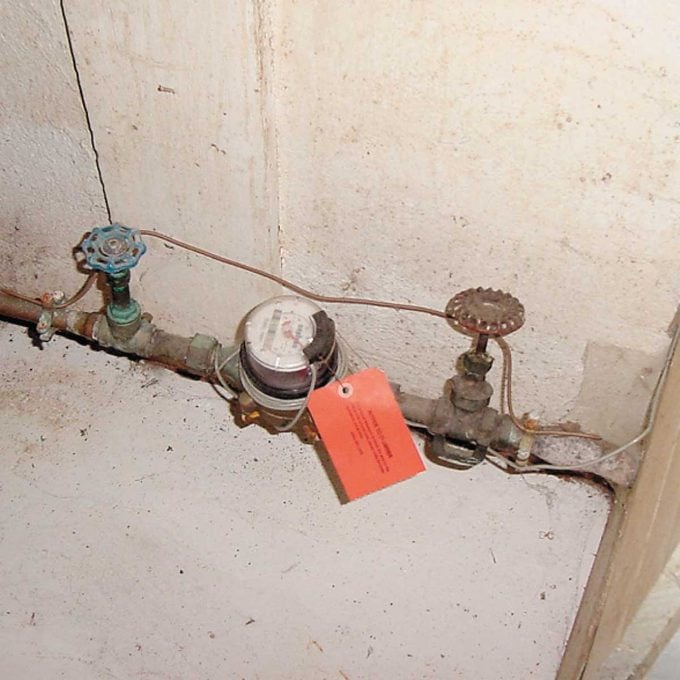
Photo 6: Water shutoff valves
The valve on the right in this photo is Marie'south street-side main shutoff; the valve on the left is the business firm-side primary shutoff. In newer homes, these volition probably be brawl valves.
Learn how remove crud and supplant your main h2o shutoff valve here.
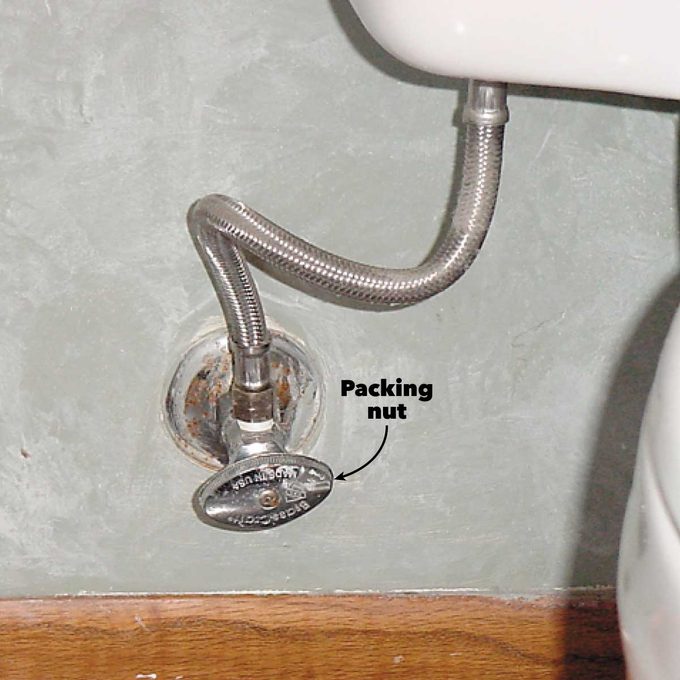
Photograph seven: Supply stop for a toilet
Between the water main in the street and the meter, there'due south also unremarkably a buried curb stop valve (accessible merely by city workers wielding special long-handled wrenches) and a corporation stop, where your house water line hooks up to the water main. Your city absolutely doesn't want you messing effectually with these last ii valves.
They adopt you turn your water off or on using the chief valve on the firm side of the meter. This valve will normally be a gate-blazon valve, with a round knurled handle, requiring several total clockwise rotations to turn off. In newer homes, it could be a brawl valve.
In improver, most houses built today have small-scale, localized shutoff valves called fixture supply stops (Photo 7) installed on the supply lines leading to toilets, faucets, dishwashers, washing machines, water softeners and water heaters. These supply stops usually have a small round or oval handle that yous turn clockwise two to four total turns to shut off the flow of water. Many older homes accept them only at toilets, if at all. This can lead to keen family discord, since working on a single drippy faucet tin crave shutting off water to the entire house at the primary valve, leaving everyone shower-less, affluent-less and waterless. With supply valves, you can plough off the h2o to a single fixture while fixing or replacing that faucet.
If your plumbing system lacks supply stops, install them when you close off the principal valve to repair a sink, toilet or appliance. Eventually you'll have supply stops at every fixture, and your family won't yell at you every time they see you with a wrench in your hand. Think, fixture supply stops must exist easily accessible; you can't drywall or plaster over them without installing an access panel to reach them.
Supply cease problems
Be aware of these mutual bug with fixture supply stops: Many water supply valves drip when turned off and then back on once more later on an extended period of disuse.
To set up a drippy supply valve, effort gently tightening the packing nut (Photograph 7) with a wrench, or opening and shutting the valve several times until the baste stops. If a supply valve simply won't stop leaking, your only option is to supplant it—which volition require shutting off the main valve. In cold climates, most people remember to close the supply shutoffs for their outdoor spigots to foreclose freezing, simply many then forget to open the outside spigot to drain the remaining water.
If the water trapped between the spigot and supply shutoff valve freezes, it can burst that section of pipe. Since in that location's no water flowing through this short damaged section of piping, in that location are no obvious leaks or sign of harm—still. Only when you turn the supply valve back on in the spring and force per unit area returns to that piping, the burst section of piping will leak like crazy—and often go unnoticed for hours or days. Ane plumber told me he'due south fabricated dozens of repairs dealing with this mistake.
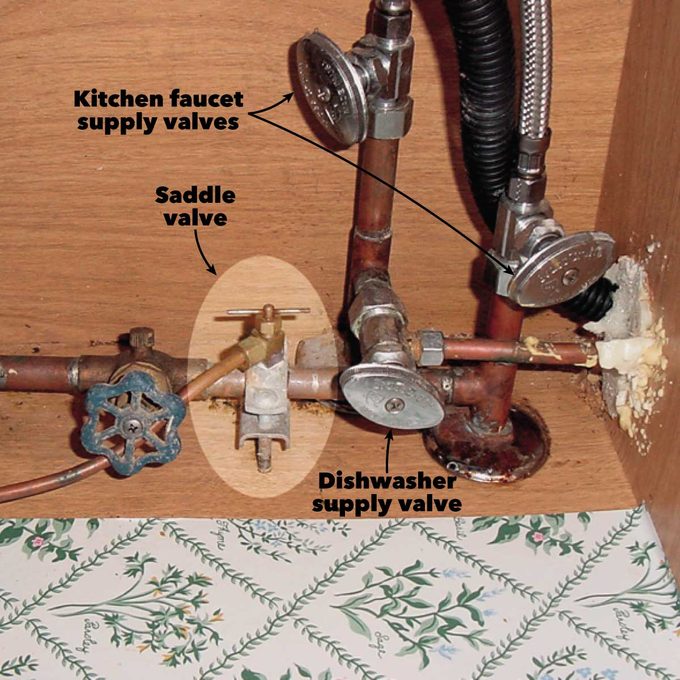
Photograph viii: Supply valves
Finally, many ice makers and furnace humidifiers are fed by small flexible copper tubes that are connected to larger copper pipes via a very minor T-handled device called a saddle valve (Photo viii). These valves substantially bite into the larger pipe to feed the smaller one. Leaky saddle valves are a major cause of residential water damage and are no longer code-compliant in many areas. If you lot have saddle valves, supercede them with standard supply stops. Since these things tin leak like crazy and cause tremendous impairment, I'm replacing it with a standard supply end as shortly as I'm washed with this story.
Learn more about installing a valve for an ice maker here.
Figure C: Typical Warm-Conditions H2o Arrangement
This illustration shows how water comes into the house in warm climates. Yous can find a larger version of this epitome in the Additional Information.
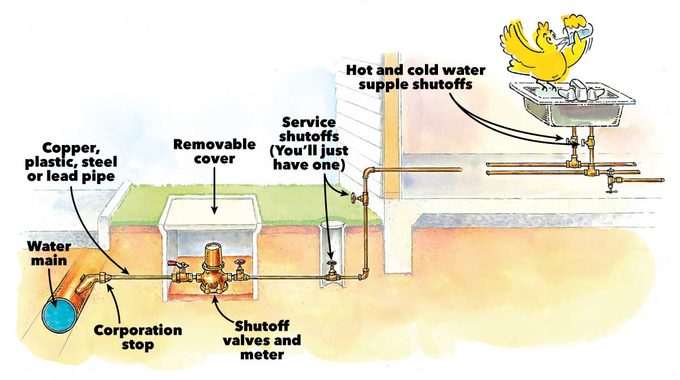
Figure D: Typical Cold-Weather condition H2o System
This illustration shows how water comes into the house in cold climates. You can discover a larger version of this prototype in the Additional Information.

Additional Information
- Figure A: Typical Gas System
- Figure B: Gas Organisation Inside the House
- Figure C: Water organisation for warm climates
- Effigy D: Water organization for cold climates
Required Tools for this Project
- Gas meter wrench shutoff tool
Required Materials for this Project
Avert concluding-minute shopping trips by having all your materials prepare ahead of time. Here's a list.
- Stainless steel wire
Source: https://www.familyhandyman.com/article/how-to-locate-your-gas-shutoff-valve-and-water-shutoff-valve/
0 Response to "How Do You Know Where to Find the Gas Shut Off Valve"
Postar um comentário